PTAG Safety and Compliance
In the trucking industry, safety and compliance are non-negotiable—they protect lives, prevent costly accidents, reduce insurance premiums, and avoid hefty fines from regulators like the DOT and FMCSA. Prioritizing them ensures smoother operations, builds customer trust, and enhances your reputation.
Safety & Compliance: Your Shield on the Road
Stay Legal. Stay Profitable. Stay Moving.
In the trucking industry, a single compliance error isn’t just a fine—it’s a threat to your Authority and your reputation. At PTAG, we bridge the gap between complex federal regulations and your daily operations.
1. Free Compliance Resources
We believe safety information should be accessible to everyone. Use these PTAG-vetted tools to audit your own operation.
• The Pre-Trip Master Checklist: A comprehensive guide to ensuring your equipment passes every roadside inspection.
• Hours of Service (HOS) Cheat Sheet: A quick-reference guide for ELD mandates and sleeper-berth rules.
• Safety Alert Newsletter: Real-time updates on FMCSA "Roadcheck" dates and changing state laws.
[Button: Access Free Resource Library]
2. Professional Compliance Services
Let PTAG’s experts handle the paperwork so you can focus on the road. We don't just tell you the rules; we implement them for you.
Audit Protection & Prep
Facing a New Entrant Audit or a targeted Safety Review? We perform "Mock Audits" to find your weaknesses before the DOT does. If you’re already under review, we provide expert representation to help protect your safety rating.
Driver Qualification (DQ) Files
Maintaining DQ files is the #1 area where fleets fail inspections. We manage the entire process: from background checks and MVRs to annual reviews and medical certificate tracking.
Drug & Alcohol Clearinghouse Management
We ensure your drivers are fully queried and registered in the FMCSA Clearinghouse, keeping you 100% compliant with federal drug and alcohol testing mandates.
Permitting & IFTA
Avoid the "Red Tape" trap. We handle your:
• UCR & BOC-3 Filings
• Quarterly IFTA Tax Preparation
• Oversize/Overweight State Permits
3. Why PTAG Compliance?
"The DOT doesn't care if you're a 'good' driver; they care if you have 'good' paperwork. PTAG ensures your paperwork is as professional as your driving."
Joining a professional trucking association group amplifies these benefits. Members gain access to expert training, regulatory updates, advocacy for fair policies, and best-practice resources that keep you ahead of changing rules. Associations foster networking, shared insights, and proven strategies that lower crash risks and improve compliance scores.
Together, commitment to safety and association support drive long-term success, efficiency, and security on the road.
Ready to Bulletproof Your Business?
Whether you need a one-time permit or a full-time safety partner, PTAG is ready to ride shotgun.
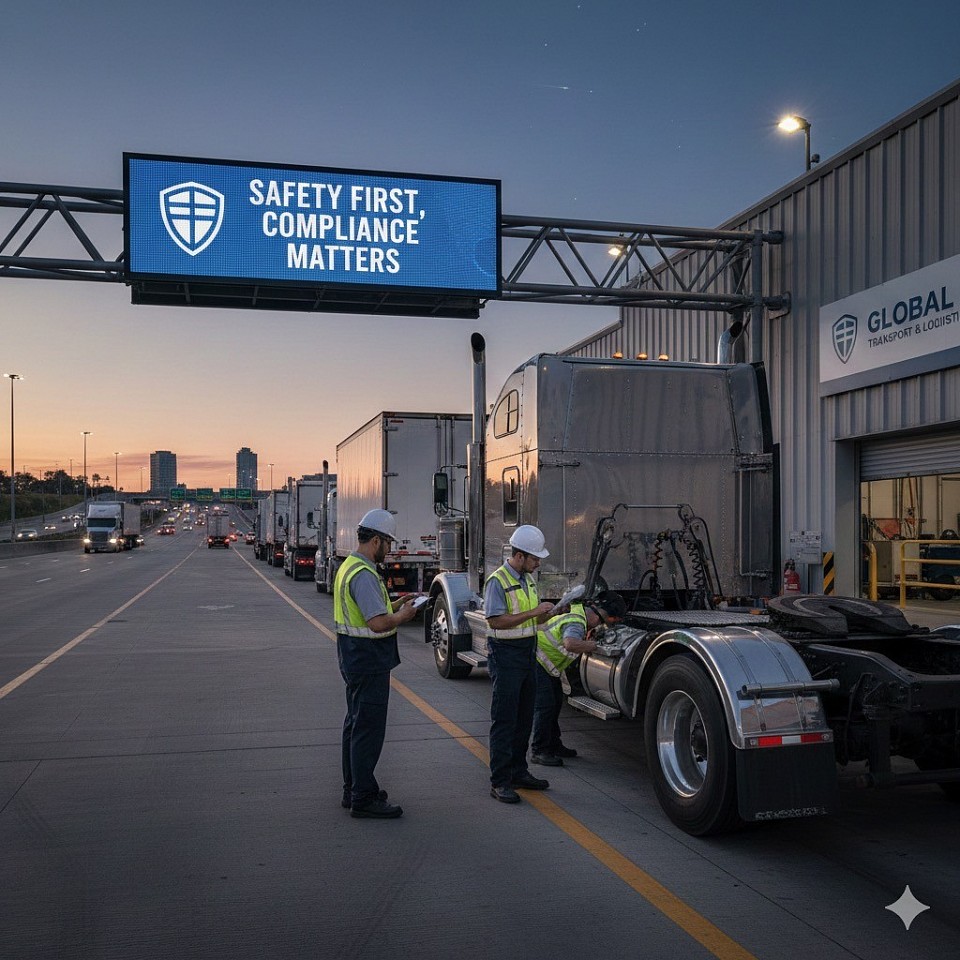
Driver Related Requirements
1. Driver-Related Requirements
• Commercial Driver’s License (CDL) with proper endorsements
• Medical Examiner’s Certificate (DOT physical) – valid for up to 24 months
• Hours-of-Service (HOS) compliance (electronic logging devices - ELDs mandatory for most carriers)
• Drug and alcohol testing (pre-employment, random, post-accident, etc.) via a DOT-compliant consortium
• Driver Qualification (DQ) file for every driver (application, MVR, background checks, road test, etc.)
• Entry-Level Driver Training (ELDT) for new CDL holders (mandatory since 2022)

Vehicle Maintenance and Inspections
2. Vehicle Maintenance & Inspection
• Annual DOT inspections (required for interstate carriers)
• Daily pre-trip and post-trip inspections (DVIRs)
• Preventive maintenance program (brakes, tires, lights, etc.)
• Proper placarding and labeling for hazardous materials (if applicable)
• CVSA inspection decals and out-of-service criteria

Company Level Compliance
3. Company-Level Compliance
• USDOT number and MC authority (if for-hire)
• Biennial MCS-150 update
• Unified Carrier Registration (UCR)
• Insurance minimums ($750,000–$5 million+ depending on cargo)
• New Entrant Safety Audit (first 18 months for new carriers)
• Safety Measurement System (SMS) scores and CSA BASICs:
• Unsafe Driving
• Crash Indicator
• Hours-of-Service Compliance
• Vehicle Maintenance
• Driver Fitness
• Controlled Substances/Alcohol
• Hazardous Materials (if applicable)

Electronic System and Record Keeping
4. Electronic Systems & Recordkeeping
• Electronic Logging Devices (ELDs) – AOBRD grandfathering ended in 2019
• IFTA (fuel tax reporting) and IRP (apportioned plates) for interstate trucks
• Electronic DVIRs and maintenance records (6–12 months retention)
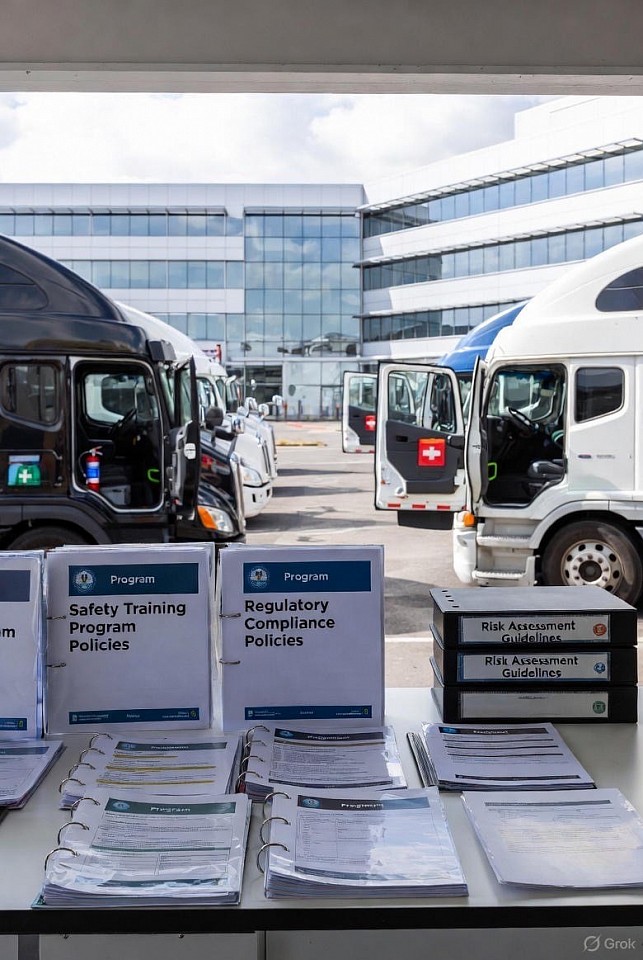
Safety Program and Policy’s
5. Safety Programs & Policies
• Written safety policy/manual
• Driver training and ongoing safety meetings
• Accident register and investigational procedures
• FATIGUE management and distracted driving policies
• CSA intervention thresholds and corrective action plans

Haz-Mat
6. Hazardous Materials (HazMat) – if applicable
• HazMat registration with PHMSA
• Specific training every 3 years
• Security plans for certain materials
Who Handles This in a Trucking Company?
Most companies have one or more of the following roles:
• Safety Director / Safety Manager
• Compliance Officer
• Third-party compliance service (e.g., J.J. Keller, Tenstreet, Foley Services, Samsara, Motive, etc.)
Consequences of Non-Compliance
• Out-of-service orders (driver or vehicle)
• Huge fines (up to $15,000+ per violation in extreme cases)
• Downgraded safety rating (Conditional or Unsatisfactory)
• Higher insurance premiums
• Loss of operating authority
In short: Safety and Compliance = everything required to keep the DOT, FMCSA, state police, and CVSA inspectors happy so your trucks and drivers can stay on the road legally and safely.
